

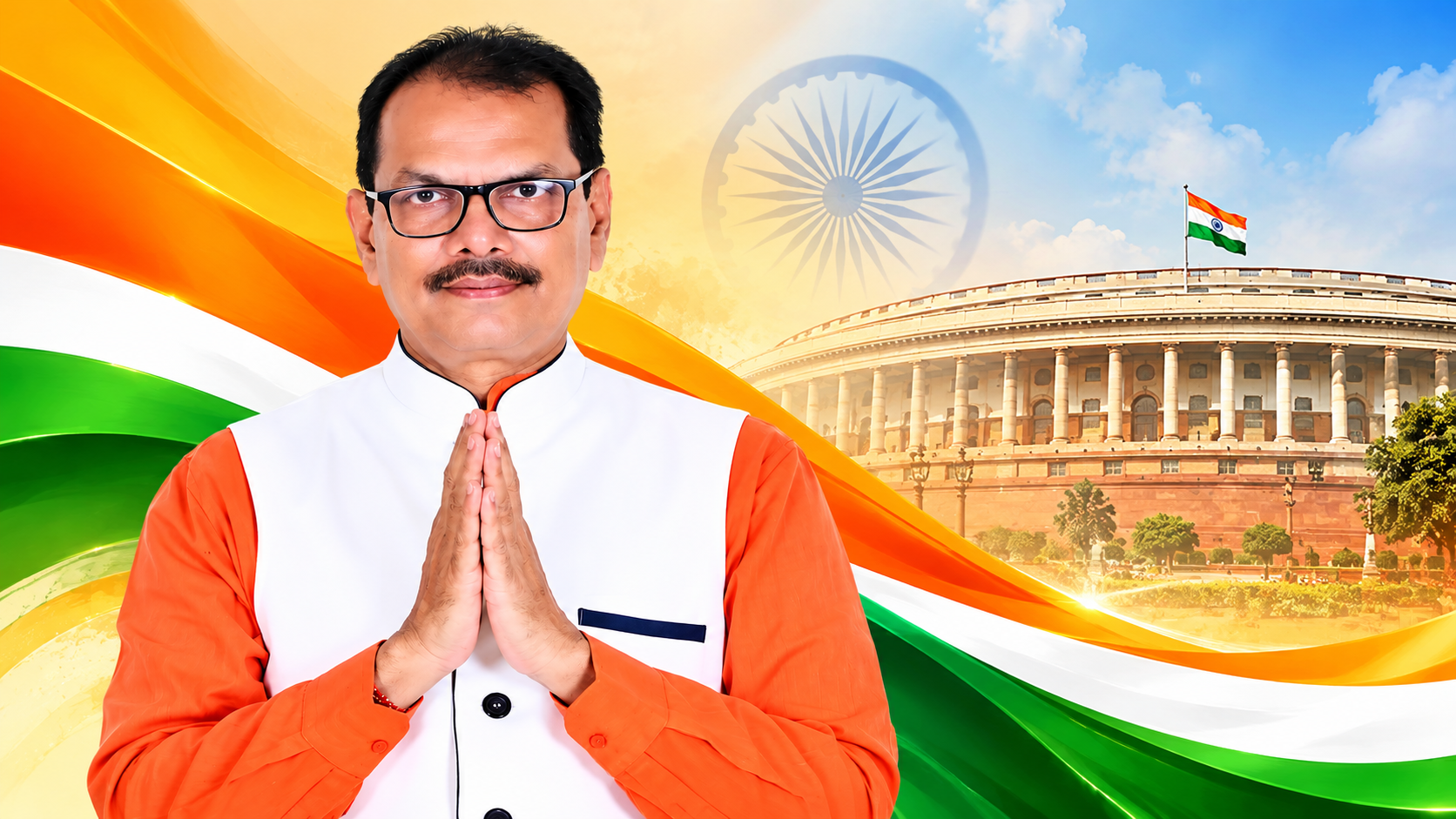
JAJPUR: From his roots in Rasulpur to the corridors of Parliament, Dr. Ravindra Narayan Behera’s professional journey spans academic research, emerging technologies, government service and electoral politics. His transition from the technology sector to public life marks a shift from working within government systems to representing the aspirations and concerns of the people of Jajpur.
Raised in Jajpur district, Dr. Behera pursued higher education and research before building a career in the government technology sector. He is associated with research in artificial intelligence (AI) and is reported to have earned a PhD in the field from Utkal University, Bhubaneswar. He subsequently served in the National Informatics Centre (NIC), where he rose to the position of Senior Technical Director.
His professional experience in government technology provided exposure to the role of digital systems in administration and public service delivery. In an era when technology is increasingly shaping governance, such experience offers a relevant perspective on the challenges of transparency, efficiency and access to public services.
His entry into electoral politics brought him into a new sphere of responsibility: representing Jajpur in the Lok Sabha. Elected to the 18th Lok Sabha in 2024, Dr. Behera now operates at the intersection of local aspirations, public policy and national-level decision-making.
DEVELOPMENT AT THE CENTRE OF JAJPUR’S ASPIRATIONS
Jajpur presents a diverse development landscape, combining agricultural communities, rural settlements, historical sites and a major industrial hub around Kalinganagar. Addressing the district’s needs requires a balanced approach that recognises the importance of agriculture, industry, infrastructure and human development.
Connectivity remains a key factor in unlocking economic opportunities. Better roads, improved railway links and stronger transport infrastructure can facilitate the movement of people and goods, connect rural communities with markets and support industrial activity. Equally important are irrigation facilities, water management and agricultural infrastructure, which directly affect the livelihoods of farming communities.
Dr. Behera’s parliamentary role provides an opportunity to raise these concerns before the appropriate authorities and pursue solutions through institutional channels. The broader priority is to ensure that development initiatives respond to the practical needs of residents across the district.
AGRICULTURE AND RURAL LIVELIHOODS
Agriculture and allied activities continue to be important to the rural economy of Jajpur. Reliable irrigation, improved access to agricultural services, market connectivity and support for horticulture can help strengthen rural livelihoods.
The effective implementation of farmer-support schemes, including PM-KISAN, is another important aspect of agricultural welfare. Ensuring that eligible beneficiaries receive their entitlements and have access to accurate information remains essential.
For the district’s agricultural economy to become more resilient, attention must also be given to water conservation, irrigation infrastructure and opportunities to improve farm productivity. Coordinated efforts involving elected representatives, government departments and local institutions can help address these priorities.
INDUSTRIAL GROWTH WITH INCLUSIVE DEVELOPMENT
The Kalinganagar industrial region has an important place in Odisha’s industrial landscape. Its continued development offers opportunities for investment, employment and economic activity. At the same time, sustainable growth requires careful planning and adequate civic infrastructure.
Housing, education, healthcare, transport and access to essential services are critical to the well-being of communities in and around industrial areas. Strengthening the links between industrial development and local economic opportunities can help ensure that surrounding communities participate in the benefits of growth.
The challenge is to pursue industrial expansion while maintaining environmental responsibility and improving the quality of life of local residents. Planned urbanisation and better coordination between industrial authorities and civic institutions will be important to this process.
PRESERVING HERITAGE, CREATING OPPORTUNITIES
Jajpur’s historical and cultural identity is another important dimension of its development potential. The district’s religious traditions, archaeological sites and historical associations offer opportunities for heritage conservation, research and responsible tourism.
Promoting tourism requires more than publicising historical landmarks. It also involves improving visitor facilities, transport access, sanitation and the preservation of cultural assets. Such initiatives can support local businesses and create livelihood opportunities while safeguarding the district’s heritage for future generations.
Academic research into India’s maritime connections and cultural exchanges, including initiatives related to Indian Ocean Cultural Studies, can also contribute to a deeper understanding of the region’s historical significance. Linking research, conservation and tourism offers a potential pathway for combining cultural preservation with economic opportunity.
RASULPUR AND THE IMPORTANCE OF RURAL CONNECTIVITY
Rasulpur remains a significant part of Dr. Behera’s personal and public narrative. Across rural Jajpur, the availability of reliable roads, bridges, water-management facilities and transport links has a direct bearing on access to education, healthcare, markets and employment.
For villages to participate fully in the district’s development, infrastructure must be planned around everyday needs. Improved connectivity can reduce travel difficulties, support agricultural trade and make essential services more accessible.
A development strategy that places rural communities alongside industrial and urban priorities can help create a more balanced growth model for the district.
FROM TECHNICAL EXPERTISE TO PUBLIC RESPONSIBILITY
Dr. Behera’s transition from artificial intelligence research and government technology to parliamentary politics represents a journey across different professional disciplines. His background brings technology and public administration into the wider discussion of development, while his role as an elected representative places public expectations and accountability at the centre of his responsibilities.
The long-term significance of this journey will depend on the extent to which development priorities translate into practical results. Improved connectivity, stronger agricultural infrastructure, sustainable industrial growth, employment opportunities and heritage conservation remain important benchmarks for Jajpur’s progress.
Ultimately, the future of the district will be shaped by the combined efforts of its elected representatives, administration, institutions, businesses and citizens. By keeping local needs at the centre of public policy and focusing on effective implementation, Jajpur can work towards a future in which rural communities, industrial centres and cultural heritage advance together.
From Rasulpur to Parliament, the journey is one of changing responsibilities. The enduring measure of public service, however, lies in how effectively those responsibilities translate into meaningful opportunities and lasting benefits for the people.

